China’s optical anti-counterfeiting industry has come a long way over the past 40 years. To look back on this journey, we held the Holography Technology Art Works Exhibition in Wang Shan, Suzhou, to mark the 40th anniversary of China’s optical security industry.
Since opening, the exhibition has drawn many industry professionals and visitors interested in holography technology.

If you come to the venue, you will see over 100 works in different styles and forms. They show not only how holographic technology has developed, but also how optical technology can be used in scientific research, industrial production, anti-counterfeiting, and art.
The exhibition is sorted into six main sections. Let’s take a look at these unique works, one category at a time.
1. Reflection Volume Holograms: A Classic Example of White-Light Holography
Reflection volume holography, also known as Denisyuk holography, is an early example of white-light holography.
In 1962, Soviet physicist Yuri Denisyuk introduced this technique.
Unlike ordinary holograms, reflection volume holograms record 3D interference patterns inside a thick photosensitive medium. They use Bragg diffraction to reconstruct images. That means you can view the 3D image directly under white light, with no laser light source needed.
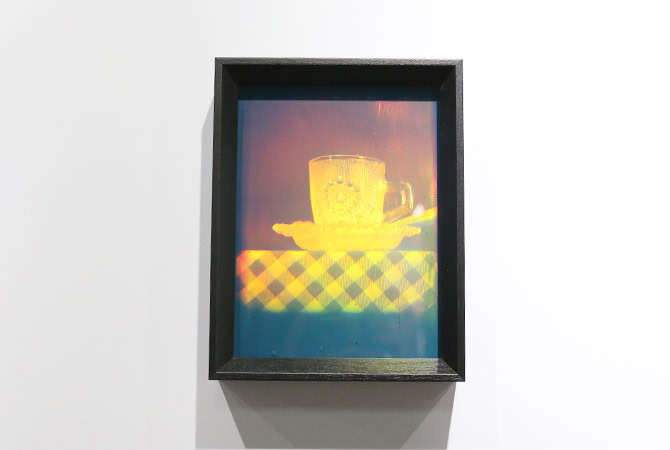
One clear feature of these holograms is that they have both horizontal and vertical parallaxes. As you move your viewing position, you can see the object from different angles and get a real sense of depth.
However, this technique requires high-quality recording materials and controlled production conditions. Most works are made individually in laboratories, so mass industrial reproduction is difficult.
At this exhibition, these works show us how early scientists explored white-light 3D imaging.
2. Laser-Reconstructed, Large-Depth, Off-Axis Transmission Holograms: Recording Real 3D Scenes
If reflection volume holography shows us the early attempt at white-light 3D imaging, laser-reconstructed, large-depth, off-axis transmission holography represents another important step in the development of modern holography.
This technology was pioneered by Emmett Leith and Juris Upatnieks.
A laser light source is required for both recording and reconstructing this type of hologram. One of its main features is that it can record real scenes covering a large space, including rich details in both foreground and background.
When you look at these holograms, you can see a strong 3D depth in the image. It has both horizontal and vertical parallax, so it’s able to present a complete 3D visual effect.
However, these holograms need to be reconstructed under a specific laser light source. Unlike white-light holograms, you cannot view them directly under ordinary white light.
The related works in our exhibition also trace the early development of holographic research in China. Universities including Changsha Railway Institute and Suzhou University once carried out related research and creative works.
These works show the technical level at the time and preserve valuable records of Chinese researchers exploring laser holography
3. Embossed Rainbow Holograms: Bringing Holography into Industrial Production
As holographic technology moved from laboratories into the commercial market, embossed rainbow holography became an important development.

This technique was invented by Stephen Benton and is a type of transmission white-light holography.
It converts holographic interference patterns into micro-relief structures. These structures can then be reproduced through embossing, making large-scale production possible.
Different from the first two types of holograms, embossed rainbow holograms mainly provide horizontal parallax. When you tilt the work or change your viewing angle, you will see obvious rainbow color shifts.
Its biggest advantage is that it is suitable for mass industrial production. In the 1970s and 1980s, this technology was widely used in commercial products.
One well-known example is the classic hologram that appeared on the cover of National Geographic magazine.
Later, embossed rainbow holography became essential for optical packaging and anti-counterfeiting. It laid an important foundation for the early large-scale development of China’s optical anti-counterfeiting industry.
4. Platinum Relief: Another Way to Create a 3D Optical Effect
Besides traditional embossed holograms, this exhibition features another remarkable optical technology — Platinum Relief.

Its design is related to the Fresnel lens.
Simply put, a Fresnel lens divides the curved surface of a traditional lens into a series of rings or sections. This allows it to keep its focusing function while making the lens much thinner.
Platinum Relief uses micro-nano fabrication techniques, such as single-point diamond cutting and grayscale lithography, to turn 3D relief graphics into thin microstructures. These structures create a visual effect similar to a physical relief.
One important note: Platinum Relief is NOT a holographic diffraction imaging technology. It creates a linear shallow relief effect and works differently from traditional holograms.
Another feature is that its reflective effect does not produce rainbow color dispersion. It also does not require a specific reconstruction light source. This means you can view it across a wider range of angles and viewing positions, without the same reconstruction conditions required by traditional holograms.
It can also be mass-produced through embossing.
With these features, Platinum Relief offers another option for optical security packaging and expands the use of micro-nano structures in packaging.
5. No-Ink-Printing: Creating Color with Micro-nano Structures
Another special category in the exhibition is the No-Ink-Printing Section.
Traditional printing uses ink or pigments to produce color. No-Ink-Printing products are different. They mainly create color through the interaction between light and micro- and nanostructures.
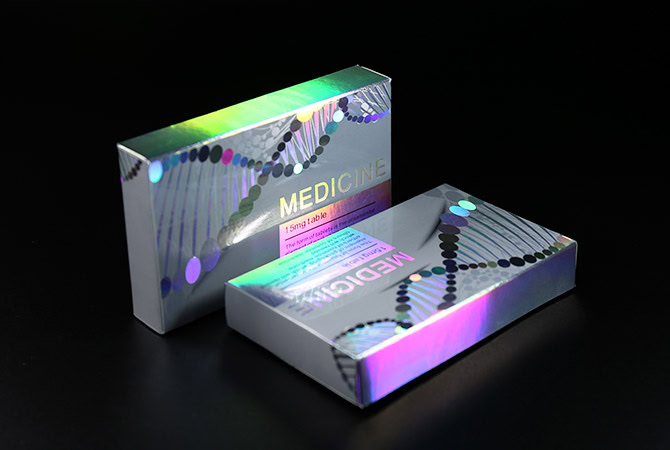
It integrates multiple micro-nano manufacturing processes, including holography, lithography, plasma, thin-film, and self-assembly. By regulating light waves to undergo refraction, diffraction, reflection, interference, scattering, and resonance, it creates different structural colors.
These colors do not come from traditional dyes or pigments. They come from the micro-nano structures themselves.
Of course, No-Ink-Printing does not mean no ink can be used at all. In actual applications, we usually take a combined approach: structural color as the main element, with a small amount of ink for additional details.
This keeps a great visual effect while cutting down traditional ink consumption and VOC emissions.
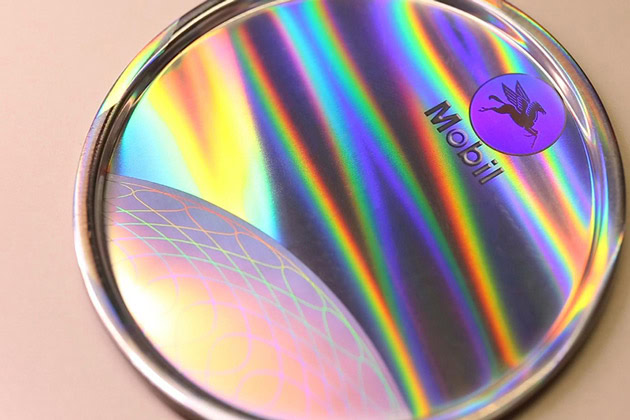
This technology offers not only unique visual effects, but also a more environmentally friendly approach to packaging printing.
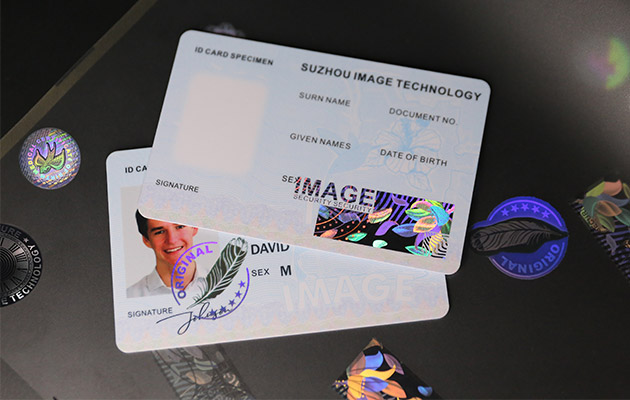
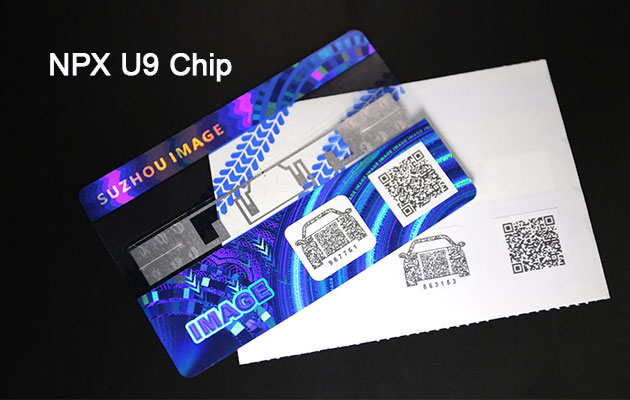
Today, No-Ink-Printing technology is already being used in ID cards, tickets and labels, packaging, apparel, and consumer electronics. It opens up new possibilities for visual design, anti-counterfeiting, and sustainable manufacturing.
6. Holographic Art: A Different Way to Express Ideas Beyond Technology
The first five categories mainly show how holographic technology has developed in scientific research and industrial applications.
The last category looks at holography from a different perspective: Art.
In scientific research and industrial applications, people usually focus on technical indicators such as diffraction efficiency, signal-to-noise ratio, and viewing angle. The goal is to produce clear and stable images that meet specific design requirements.
But things are different when it comes to art.
Artists are more interested in what they want to express and how their work makes people feel.
That’s why some visual effects that might be seen as limitations in industrial production can become part of artistic expression.
For example, monochrome images, partially blurred areas, narrow viewing angles, Airy spots, and even irregular details can all be used to express an artistic idea.
Holographic art does not have to be understood by everyone. And there is no single standard for judging it.
When you stand in front of a work, take a little more time to look at it. Pay attention to the light, the space, and the changes in the image.
Even if you don’t fully understand what the artist wants to express, that’s perfectly fine.
Sometimes, simply looking and experiencing the work is already part of enjoying art.
From Technical Research to Industrial Applications and Artistic Expression
Looking back at these six categories, you’ll see that the development of holography is not simply about one technology replacing another. It is a process in which different technical approaches have continued to develop and improve.
From Denisyuk holography and early laser holography in scientific research, to embossed rainbow holograms that made mass production possible; from Platinum Relief and No-Ink-Printing, which have expanded the applications of micro-nano structures, to holographic art, which brings a new way of visual expression.

Together, these works show how holography has moved from the laboratory into industrial production and, eventually, into the world of art.
And that’s exactly what we wanted to share through this exhibition.
The exhibition will be coming to an end next week. We’d like to thank everyone who has visited, followed the exhibition, and joined us for discussions and exchanges.
Forty years of development mark an important chapter in China’s optical security industry. But they also mark the beginning of new possibilities.
These works preserve the achievements of the past and give us a glimpse of what micro-nano photonics may bring in the future.
The exhibition may be coming to an end, but our exploration of light will continue.