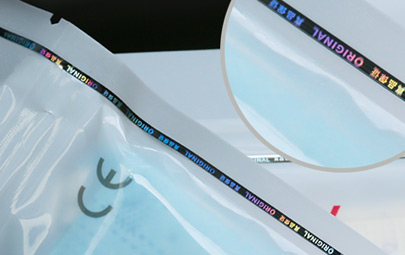
Have you ever had such an experience? You bought a product that you really wanted. The packaging was affixed with an exquisite holographic security sticker. After scratching off the coating, you might see a string of query codes, which seemed particularly formal and made people feel reassured.
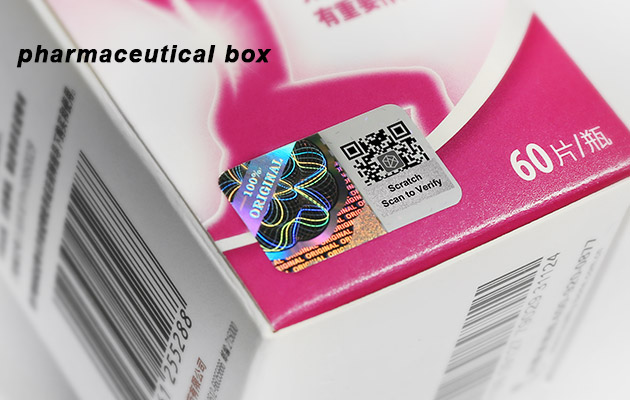
However, when you started using the product, something did not feel right. Then you found out that the security sticker was fake, and that is really disappointing. It can also make you not trust the brand anymore.
Many people think that if a product has a hologram sticker it is authentic. That is not true. It is this seemingly natural judgment that has become a cognitive blind spot for many consumers and the easiest place for counterfeiters to exploit.
Many people believe that hologram security stickers are high-tech and difficult to imitate. Absolutely, it is. But the reality is that some low-end counterfeits do not require expensive optical equipment or advanced optical anti-counterfeiting technology.
They just need to follow the pattern and imitate the color, layout, and appearance to make a fake label that looks “real”.
Especially on high-value products such as cosmetics, health products, and high-end tobacco and alcohol, it has long been common to stick a fake security sticker to deceive people.
What counterfeiters seize is the habit of ordinary people to “distinguish authenticity by looking at the sticker”, and use a thin layer of superficial effort to easily fool pairs of unsuspecting eyes.
When we discovered that the product was wrong, we looked back at the security sticker and realized that it was just a “prop” for peace of mind from beginning to end.
Today, our company (Image Tech) wants to tell you the truth about holographic security stickers.
1. The Technical Principle of Holographic Security Stickers
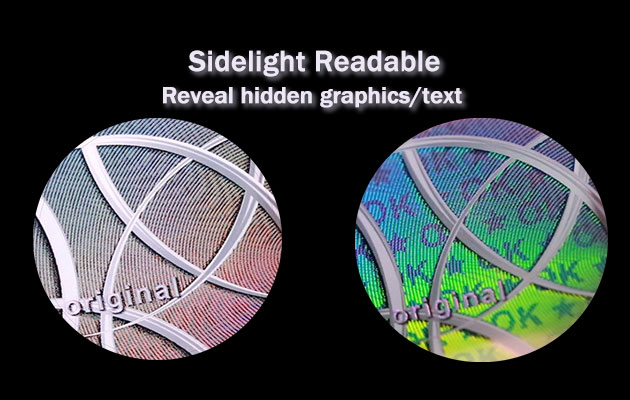
The secret to security stickers is in the high-resolution micro-nano structures that are inside them. When you turn the sticker around, you see colors moving and a 3D effect. This is because of the way the light interacts with the optical physical structures, and it is hard to copy with regular printing.
When you rotate the label around, you will find colors flow, 3D depth of filed appear in front of you. And these physical micro-nano structures cannot be replicated by ordinary printing methods.
2. How can you tell if a hologram security sticker is fake?
In fact, avoiding falling into the trap of counterfeit and substandard products is not difficult, and it does not necessarily require professional knowledge and expensive equipment. Consumers can use the following simple methods.
1) First, move the sticker around. See if the pattern changes.
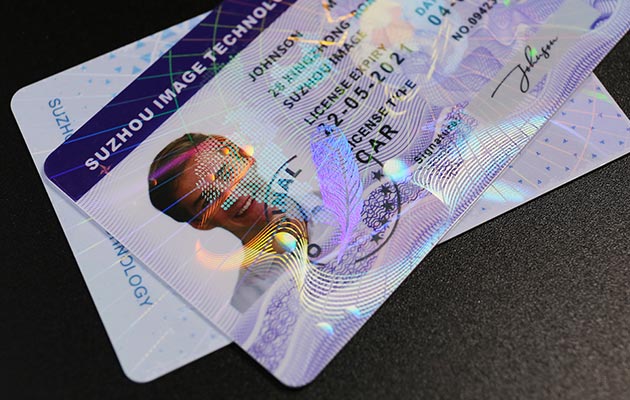
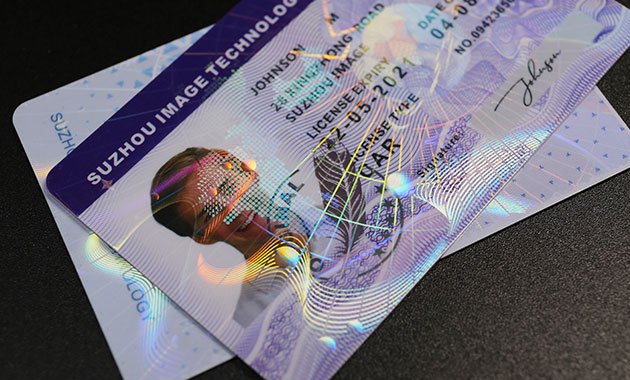
When you get the product, don’t just stare at the packaging; gently turn the angle to observe whether the pattern on the security sticker changes with the change of viewing angle.
Real hologram security stickers will show rich color effects from different angles, while fake stickers will have difficulty imitating this dynamic change.
2) Second, look closely at the sticker.
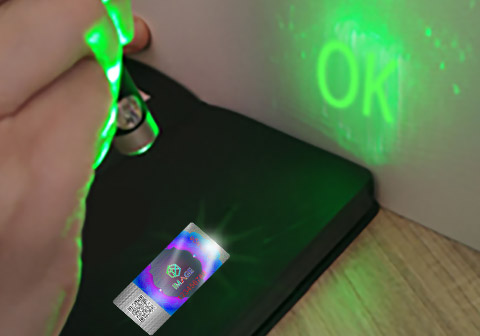
Some security stickers use some hidden optical anti-counterfeiting technologies, such as micro texts, laser reproduction, etc. You can follow the brand’s official instructions to see which hidden optical anti-counterfeiting technologies have been applied, and then use simple tools to find them.
If the label uses micro text technology, a 40 – 200x magnifying glass is needed to read it; if laser reproduction technology is used, a laser pen is needed to illuminate the required area to present a still or dynamic image at a specific angle.
3) Third, verify it again.
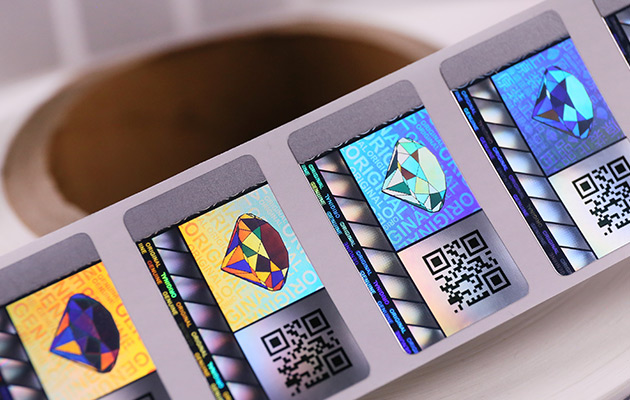
Some security labels have QR codes printed on them. Scanning the corresponding QR code can distinguish the authenticity. Remember to pay attention to whether the first query is displayed when checking the authenticity. Click to learn more about the details of the hologram QR code stickers.
Many people think anti-counterfeiting is too complicated; absolutely, it is. But truly reliable optical anti-counterfeiting never relies on visual appearance, but on the high-resolution micro-nano structure.
Fake labels can copy the pattern, copy the color, and print similar textures, but they cannot imitate the core laws of optical anti-counterfeiting, the natural change trajectory of light, and the underlying physical process barriers.
3. Why are fake optical security stickers common?
Despite advances in anti-counterfeiting technology, fake stickers are still common. The reasons behind this are worth thinking deeply about.
First of all, the low cost of counterfeiting is an important factor. For those criminals who pursue short-term interests, simple printing technology and low-cost materials are enough to meet their needs.
Secondly, consumers ‘insufficient awareness of anti-counterfeiting is also a key issue. Many people still rely on the concept of “having stickers means an authentic product” and ignore further verification steps.
In addition, some consumers lack the necessary anti-counterfeiting knowledge, which is one of the reasons why fake labels are rampant.
Although most people know about the existence of holographic anti-counterfeiting, they know very little about the principles and technical details behind it. This information asymmetry provides opportunities for counterfeiters to take advantage of.
4. What should brands do?
In addition to striving to improve anti-counterfeiting technology, brands also need to popularize anti-counterfeiting knowledge of their own brand products to consumers.
For example, publishing some detailed anti-counterfeiting guide pictures and texts that show how to spot products, or making videos that explain how to identify real products.
Brands can post these on their websites and social media channels to help consumers learn. This can also help consumers trust brands more.
Our company helps brands come up with plans to protect their products. You can click on the brand protection pages to learn more about this.
When you buy things, expensive things, you should be careful. Do not just believe that a product is real because it has a sticker on it. You need to check the product times to make sure it is real. This is the way to avoid buying fake products and protect your rights.
A good holographic security sticker is not something that looks nice on a product. It is also a promise from the brand that the product is safe and real. The real goal of counterfeiting measures is to help people protect themselves from fake products.
When you shop, do not just look for a label on the product. Do not be fooled by products that look real but are not. Real security is not about looking real; it is about being able to prove that it is real.