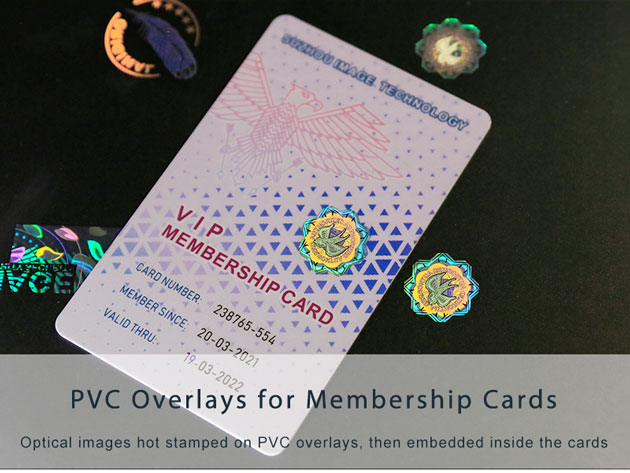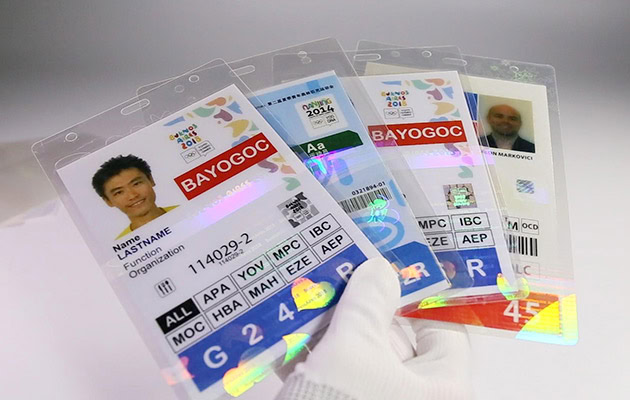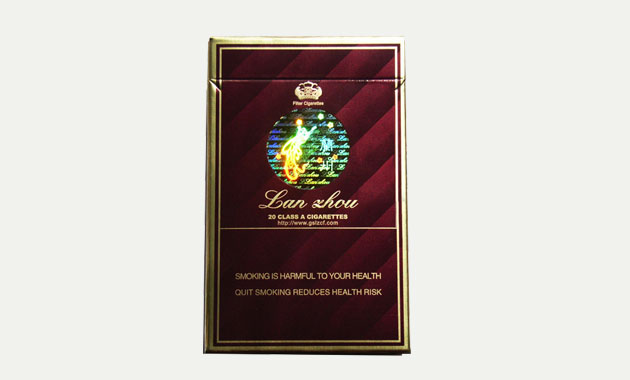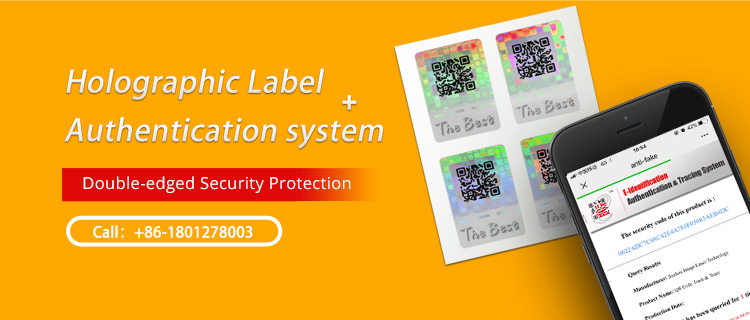
The importance of ID documents determines their security level. Generally speaking, a high secured ID documents are impossible to have only a single security feature. For many projects, these features are combined as part of a complete identity security solution.
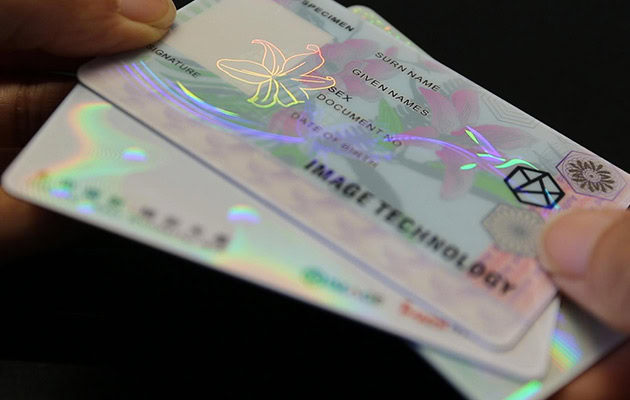
Besides common optical security in recent years, do you know any other security technologies that are integrated? Here we share some security features that are often used in identity documents to improve security.
First: Security Ink Printing
There are many kinds of security inks, but the three commonly used for identity documents are fluorescent ink, optical variable ink, and magnetic ink.
Fluorescent ink (UV ink): hidden graphics will appear under UV light. It can be pre-designed text or graphics.
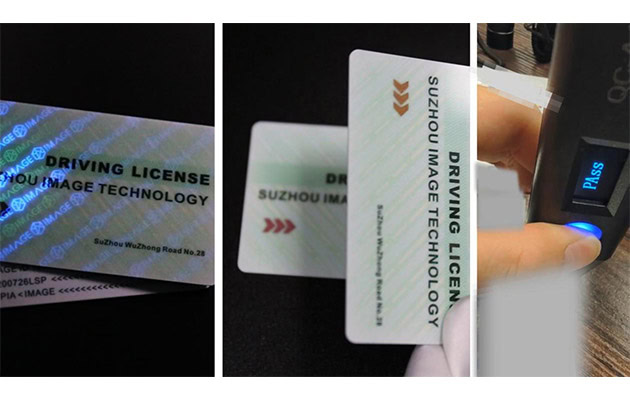
Optical variable ink (OVI) presents two different color changes as the viewing angle shifts. Commonly appear red-green change.
Magnetic ink requires a specialized tool to verify whether it’s authentic. If yes, the tool will sound out “PASS”; otherwise, it’s a fake one.
Security inks are widely used for ID documents because they can meet authentication requirements in various situations. Some can be verified by the naked eyes through transferring viewing angles. Some can be authenticated by dedicated tools.
Second: Laser Engraving.
Laser engraving can add permanent and anti-tampering information on the surface of documents. It’s very common on optical laminate pouches. The laser pattern can be generic or customized based on customers’ requirements.
The principle is high-precision laser engraving of the pre-designed graphics on the pouch. Compared with ordinary printing, laser-engraved information offers excellent resistance to wear and chemical corrosion, as well as tamper-proof properties.
Third, Laser Personalization.
For ID cards made of PC, short for polycarbonate, laser personalization is one of the most secure features.
Using the laser process, various variable information, such as portraits, names, ID numbers, QR codes, and serials, can be printed on ID cards.
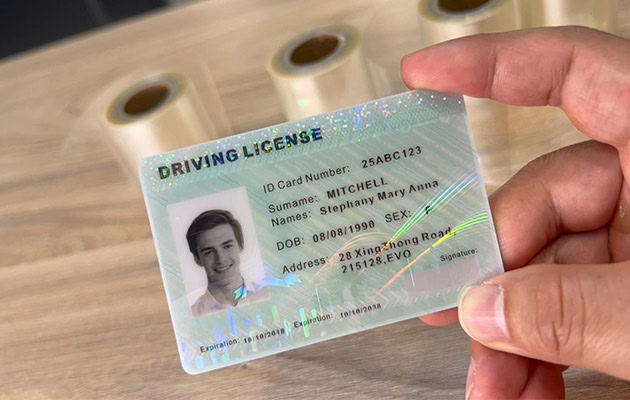
Each card carries unique personal data, extremely adding the difficulty of tampering.
Fourth, Electronic Security.
Identity information and encrypted data are written into the electronic chip and combined with cryptographic algorithms to achieve higher levels of identity authentication, secure access control, and data security protection.
When electronic authentication is combined with physical anti-counterfeiting features, it provides additional security against identity fraud.
Each anti-counterfeiting technology has its own role. Some are convenient for rapid identification with the naked eye, some require professional equipment for verification, and some are used for digital identity authentication.
Only when they both play their role and work well together can the overall security of documents be truly improved.
In short, no single anti-counterfeiting technology can solve all problems. Highly secure ID documents often do not rely on a single anti-counterfeiting technology; they use multiple anti-counterfeiting methods to build a more complete security protection system.
How to choose tailor-made security solutions for your projects?
Different projects have different requirements, so there is no “generic solution” that applies to all projects.
A suitable security solution usually requires a careful consideration of multiple factors, including: the required security level, expected service life, personalized processing methods, verification environment, budget, and production requirements
Instead of choosing a single security feature in isolation, many organizations are committed to designing a complete multi-layer security system to balance security, durability, and productivity.
As counterfeiting technology continues to evolve, anti-counterfeiting technology of ID documents must also keep pace with the times.
Optical anti-counterfeiting technology is certainly a necessary element. If combined with other security features such as security inks, laser engraving, laser personalization, and electronic verification, we think it will achieve more excellent security performance.
IMAGE TECH still believes single technology is challenging in providing comprehensive protection. The most secure ID documents should be a tailored solution based on specific project needs, and then through a combination of multiple anti-counterfeiting features.