When you’re working on an ID card, driver’s license, or passport that needs to last for years, there are usually a few things you want to know:
- Will the card be durable enough?
- Can you upgrade the security features when needed?
- Can you personalize the card?
- Can you keep the quality stable when you move into large-scale production?
Compared with materials like PVC and PETG, PC (Polycarbonate) offers a longer service life, better security performance, and good compatibility with different production processes.
That’s why PC (polycarbonate) is now widely used for high-security ID documents.
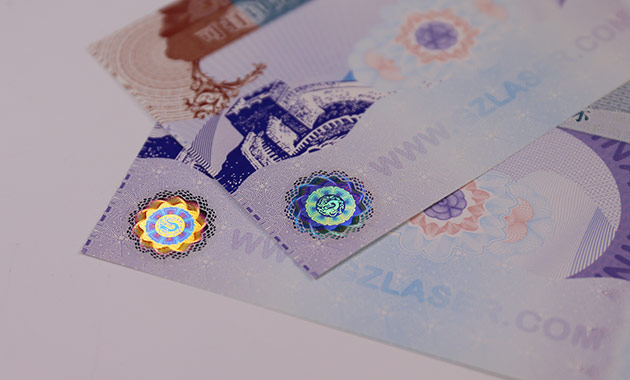
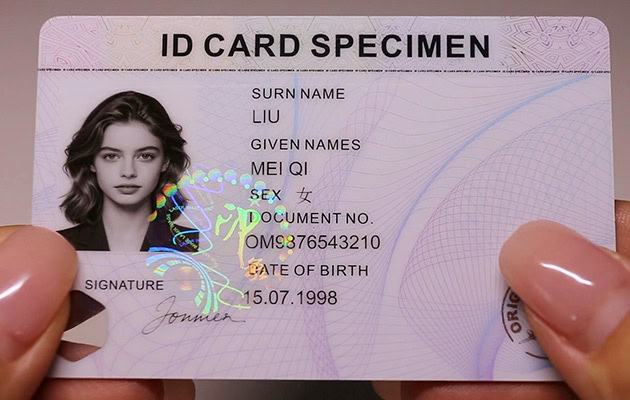
To help you see what is possible with PC, we’ve prepared two PC security card samples. One is designed for standard CR80 cards, and the other for a PC passport data page. You can also request samples for testing.
1. CR80 PC Security Card — Different Optical Security Features
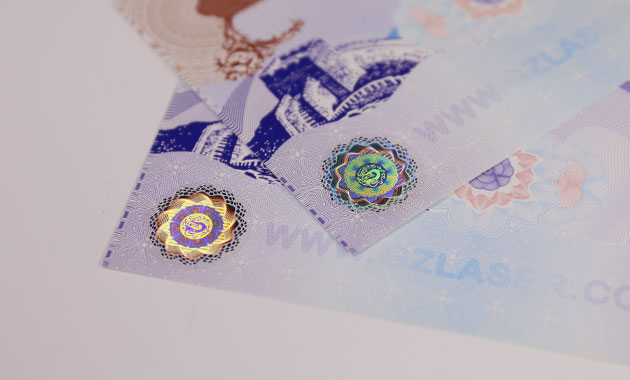
When you design a PC (polycarbonate) security card, you can combine different optical security features based on your project’s needs.
- For example, you can use:
- 2D and 3D holographic effects
- DOVID (Diffractive Optically Variable Image Device) effects
- Color-shifting effects
- Dynamic or motion-like effects
- Fiber encryption
If you need a higher level of security, you can also add more specialized security features.
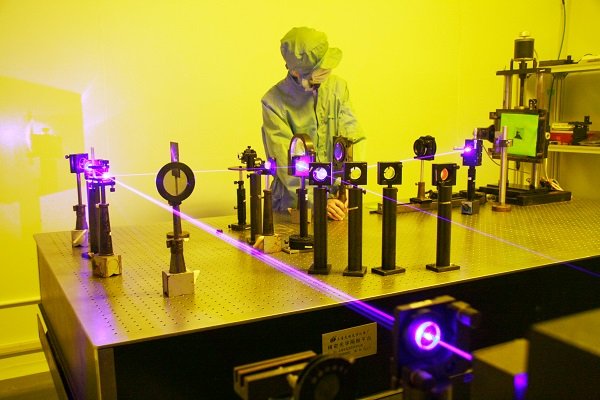
For example, we can design multi-channel microtext. When you look at the same area under a microscope, different microtext can appear as the viewing or lighting direction changes.
Depending on the design, you can have 2 to 4 different images integrated into the same area.
If you want a specific image or optical effect to appear under laser illumination, you can also consider covered laser-readable or laser encryption security features.
The exact combination depends on your card design, verification method, production process, and the security level you need.
2. More Than Optical Security — You Can Combine Different Security Features on One Card
Besides the optical image laminated into the card, this sample also shows several other security printing features.
For example:
Optically Variable Ink (OVI): the color changes from red to green when you view it from different angles;
Transparent window: can be combined with laser personalization;
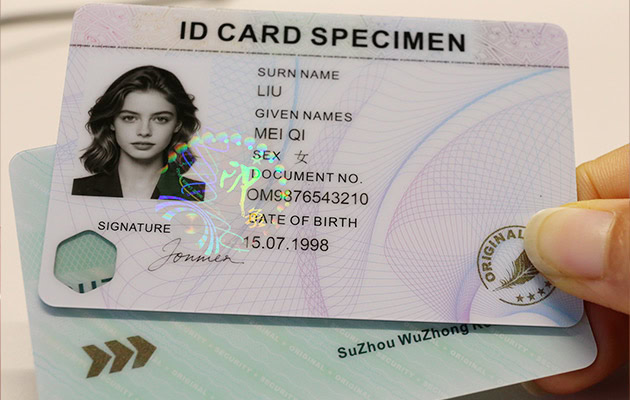
CMI laser image area: supports variable or fixed laser images.
You can combine these features in different ways depending on your project.
3. When Should You Do Personalization On a PC Card?
There are two ways to organize the production process: Do lamination, then finish personalization; or personalization first, then do lamination.
If you’re using laser personalization, we recommend laminating first and personalizing afterward.
Once the Polycarbonate layers have been laminated with the ID documents together, the card has already formed its complete structure.
You can then use the laser to personalize the card from inside the PC structure. This gives you better durability and better protection against tampering.
It’s also a common production method for high-security PC documents.
4. PC Passport Data Page — Designed for Passports
Besides CR80 cards, we also provide PC (polycarbonate) passport data page solutions.
As ePassports continue to develop, more countries are using PC for their passport data pages.

PC offers a longer service life, works well with laser personalization, and gives you more options for integrating different security features.
5. Why Use Holographic Hot Stamping + PC Lamination?
For a high-security PC document, the optical image usually needs to line up accurately with the photo, text, transparent window, and other security features. That’s why we normally use a process like this:
Optical design → Hot stamping foil production → Registered hot stamping → PC embedded lamination. We call it the DOVID hologram for polycarbonate identity documents
There are a few reasons for using this process.
1) It Makes Optical Positioning Easier to Control
With registered hot stamping, you can use pre-designed register marks to transfer the optical image to the exact position on the PC overlay.
If you need the optical image to line up with other elements on the card, this is especially important.
2) It Gives You More Flexibility for Custom Optical Designs
If you want to add your own logo, text, image, or a specific optical effect, we can make the hot stamping foil according to your design and transfer the image to the position you need.
This gives you more flexibility when you’re working with different card layouts and project requirements.
3) It Works Well with Other Security Features
A PC security document usually doesn’t rely on just one security feature. You may also want to combine OVI, transparent windows, laser images, and other features on the same card.
With registered hot stamping, you can keep the optical feature in the right position relative to these other elements. This makes it easier to build the security design as a whole.
4) The Optical Structure Is Sealed Inside the Polycarbonate
Once the registered hot stamping is finished, the next step is PC lamination. After lamination, the optical structure is sealed inside the PC material.
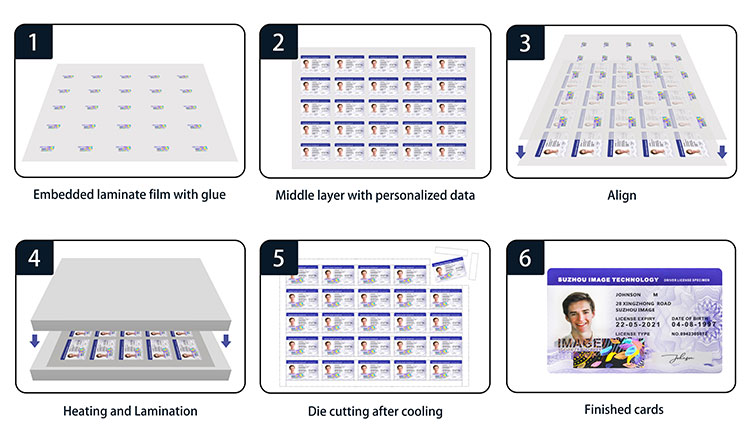
This helps reduce wear caused by exposing the optical structure directly on the surface, while also creating a more complete card structure.
So, registered hot stamping isn’t simply an extra production step. It helps you solve three practical problems:
- How do you position the optical image accurately?
- How do you create a custom optical design?
- And how do you seal the optical structure inside the PC document?
6. From Optical Design to PC Card Production — How Can We Help?
These two samples show more than just different optical effects. They also give you a look at how a PC security document can go from design to finished card.
From optical design and mold development to registered hot stamping, PC embedded lamination, and personalization, IMAGE TECH can work with you on the right PC security solution for your project.
You can also combine different security features and production processes based on how your document will be used.
We have our own design, R&D, and production teams, along with a standardized quality management system. We’re IOTA members and also ISO 9001 and ISO 27001 certified.
Over the years, we’ve worked on a range of high-security ID document projects in China and overseas.
So, if you’re planning a PC ID card, driver’s license, or passport project, these two samples can give you a clearer idea of what’s possible with different PC security processes.
You can also use them as a reference when you’re comparing options or discussing the project with your team.